
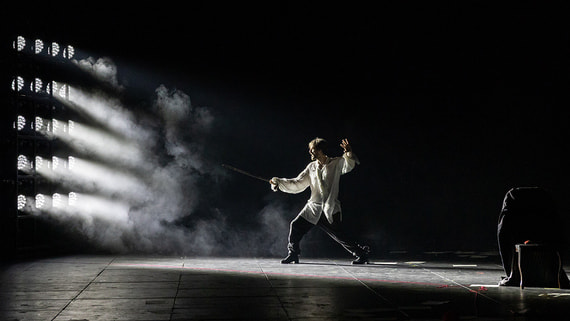
In a remarkable new theatrical interpretation, renowned Russian director Evgeny Kamenkovich has brought Edmond Rostand’s beloved classic “Cyrano de Bergerac” to the stage with a fresh vision that emphasizes the play’s deeper themes of honor, nobility, and spiritual warfare. The production, which has already garnered significant attention from theater critics and audiences alike, presents the iconic French drama not merely as a romantic tragedy but as an elevated meditation on chivalric ideals and the eternal struggle between outer appearance and inner virtue.
Kamenkovich, known for his thoughtful and innovative approach to classical texts, has chosen to highlight the knightly aspects of Cyrano’s character, transforming the familiar story into what he describes as a “poem of chivalry.” This interpretation strips away some of the conventional romantic melodrama that often dominates productions of Rostand’s work, instead focusing on the protagonist’s unwavering commitment to truth, honor, and selfless love as manifestations of a warrior’s code.
The Enduring Legacy of Rostand’s Masterpiece
Edmond Rostand wrote “Cyrano de Bergerac” in 1897, during a period when French theater was dominated by naturalism and darker psychological dramas. The play’s triumphant premiere at the Théâtre de la Porte Saint-Martin in Paris was nothing short of a cultural phenomenon, receiving over forty curtain calls on opening night. Rostand had created something that audiences desperately craved: a return to romanticism, heroism, and the celebration of noble ideals in an increasingly cynical age.
The historical Cyrano de Bergerac was indeed a real person — a seventeenth-century French novelist, playwright, and duelist who lived from 1619 to 1655. While Rostand took considerable liberties with the facts of his life, the real Cyrano was known for his wit, his skill with a sword, and his unconventional philosophical writings, which included early works of science fiction. His famous nose, while likely not as dramatically oversized as Rostand depicted, was apparently notable enough to become part of his legend.
Kamenkovich’s Artistic Vision
Evgeny Kamenkovich brings decades of experience to this production, having established himself as one of the most respected directors working in Russian theater today. His approach to “Cyrano de Bergerac” reflects his long-standing interest in exploring how classical texts can speak to contemporary audiences while remaining faithful to their original spirit. By framing the play as a meditation on chivalry, Kamenkovich invites viewers to consider what knightly virtues might mean in the modern world.
The concept of Cyrano as a “warrior of light” draws upon rich traditions of spiritual and literary symbolism. In this interpretation, the protagonist’s battles are not merely physical confrontations with hostile swordsmen or romantic rivals, but represent a deeper struggle against mediocrity, dishonesty, and moral compromise. Cyrano’s refusal to hide his true feelings behind pretty lies, his insistence on maintaining his independence despite powerful patrons, and his willingness to sacrifice personal happiness for the sake of another’s joy all become expressions of a warrior’s discipline and devotion.
Themes That Resonate Across Centuries
The production reportedly emphasizes the timeless tension at the heart of Rostand’s play: the conflict between external beauty and internal worth. Cyrano, despite his brilliant mind, poetic genius, and incomparable courage, believes himself unworthy of love because of his physical appearance. His decision to woo the beautiful Roxane on behalf of the handsome but inarticulate Christian creates one of theater’s most poignant love triangles, raising questions about the nature of attraction, communication, and authentic connection that remain relevant in today’s image-obsessed society.
Theater scholars have noted that Kamenkovich’s interpretation aligns with a broader movement in contemporary directing that seeks to find universal spiritual themes within classical dramatic literature. By presenting Cyrano as a chivalric ideal rather than simply a tragic romantic figure, the production offers audiences an opportunity to reflect on their own commitments to honor, truth, and selfless service. The warrior of light imagery suggests that true nobility lies not in birth or appearance, but in the courage to live according to one’s highest principles regardless of personal cost.
Expert Opinion: Kamenkovich’s reframing of Cyrano as a chivalric poem rather than a romantic tragedy represents a significant interpretive shift that may influence future productions of Rostand’s masterpiece. This approach resonates particularly strongly in an era when audiences increasingly seek meaning and moral clarity in classical works. The production’s success could herald a broader revival of interest in theatrical explorations of heroic ideals and spiritual nobility.