
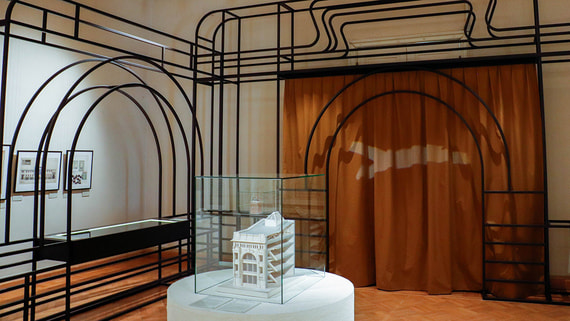
The Shchusev State Museum of Architecture in Moscow has unveiled a remarkable exhibition celebrating the vibrant and eclectic legacy of Fyodor Shekhtel, one of Russia’s most influential architects of the Art Nouveau period. The exhibition, titled “Dreams of Russian Art Nouveau,” offers visitors an unprecedented opportunity to explore the creative universe of a master who transformed Moscow’s architectural landscape at the turn of the twentieth century. Through original drawings, photographs, personal artifacts, and architectural models, the museum presents a comprehensive retrospective of Shekhtel’s revolutionary approach to design, which seamlessly blended functionality with artistic expression in ways that continue to inspire architects and designers today.
The Visionary Behind Moscow’s Transformation
Fyodor Osipovich Shekhtel, born in 1859 in Saratov, emerged as the defining figure of Russian Art Nouveau, known locally as “Style Moderne.” His journey from a young artist studying at the Moscow School of Painting, Sculpture and Architecture to becoming the most sought-after architect of the Russian Empire’s wealthy elite is a testament to his extraordinary talent and relentless innovation. Shekhtel designed over two hundred buildings during his prolific career, with his most productive years spanning from the 1890s to the 1910s. His works include the legendary Ryabushinsky Mansion, now the Gorky Museum, with its famous flowing staircase resembling a frozen wave, and the Moscow Art Theatre, whose iconic seagull emblem he personally designed. These structures demonstrate his belief that architecture should function as a complete artistic composition, where every element from doorknobs to ceiling decorations contributes to a unified aesthetic experience.
What distinguished Shekhtel from his contemporaries was his ability to synthesize multiple influences into a distinctly Russian architectural language. While Western Art Nouveau architects like Victor Horta in Belgium and Hector Guimard in France were developing their organic, nature-inspired forms, Shekhtel was incorporating traditional Russian motifs, Byzantine elements, and Gothic references into his designs. His Yaroslavsky Railway Station, completed in 1904, exemplifies this synthesis brilliantly, combining Russian fairy-tale imagery with modern engineering. The building’s colorful ceramic tiles, elaborate roof lines, and dramatic tower create a gateway that prepared travelers for their journey into the Russian heartland. Contemporary architectural historians consider this station among the finest examples of Neo-Russian style, demonstrating how national identity could be expressed through modern architectural vocabulary.
Artistic Philosophy and Technical Innovation
The current exhibition at the Museum of Architecture reveals the depth of Shekhtel’s artistic philosophy, which treated buildings as symphonies in stone, glass, and metal. Each project began with extensive sketches that explored not just spatial arrangements but emotional atmospheres. Shekhtel believed that architecture should evoke specific feelings in its inhabitants and visitors, from the mysterious intimacy of private residences to the solemn grandeur of public buildings. His use of natural light, flowing spaces, and organic ornamentation created environments that seemed almost alive, breathing with the rhythm of daily life. The exhibition displays numerous original watercolors and technical drawings that demonstrate his meticulous attention to every decorative detail, from wrought-iron railings featuring sinuous plant forms to custom-designed furniture that complemented the architectural spaces.
Beyond aesthetic considerations, Shekhtel was a pioneer in adopting new construction technologies. He embraced reinforced concrete, steel framing, and large expanses of glass at a time when many Russian architects remained committed to traditional building methods. His commercial buildings, including several for the Moscow Merchant Society, featured innovative solutions for natural lighting and flexible interior spaces that anticipated twentieth-century functionalism. The Ryabushinsky Printing House, with its rational floor plan and modern amenities, showed that Art Nouveau could serve industrial purposes as effectively as residential ones. This combination of artistic sensibility and practical innovation made Shekhtel the architect of choice for Moscow’s progressive business community, who recognized that modern commercial enterprises required modern buildings.
Legacy and Contemporary Relevance
Shekhtel’s later years were marked by tragedy, as the Russian Revolution of 1917 stripped him of commissions, property, and social standing. He died in poverty in 1926, his once-celebrated works neglected and his contributions largely forgotten during the Soviet period’s preference for constructivism and socialist realism. However, the late twentieth century witnessed a remarkable revival of interest in his architecture. Preservation efforts have saved many of his buildings from destruction, and several have been designated as UNESCO World Heritage Sites or protected monuments. Today’s exhibition represents the culmination of decades of scholarly research and restoration work, presenting Shekhtel’s achievements to a new generation of visitors. Architectural critics note that his emphasis on total design, where architecture, interior decoration, and landscape work together harmoniously, anticipates contemporary approaches to sustainable and human-centered design. As Moscow continues to evolve, Shekhtel’s buildings stand as reminders that great architecture transcends its historical moment, continuing to inspire wonder and admiration more than a century after their creation.
Expert Opinion: The renewed attention to Fyodor Shekhtel’s work reflects a broader global trend of reconsidering Art Nouveau’s contributions to architectural modernism. His ability to balance technological innovation with cultural identity offers valuable lessons for contemporary architects grappling with questions of regional character in an increasingly globalized profession. As cities worldwide seek to preserve their architectural heritage while accommodating growth, Shekhtel’s integrative approach provides a compelling model for how tradition and progress can coexist in the built environment.