
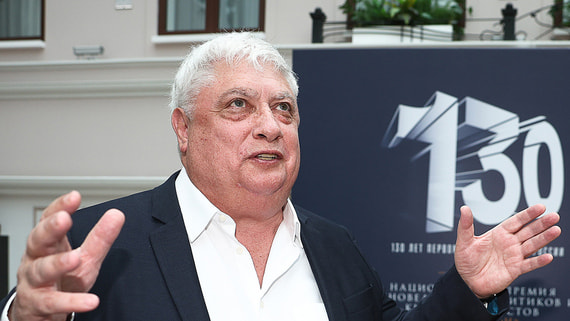
In a surprising turn of events in the Russian film industry, the legendary producer behind the cult classic ‘Bumer’ has announced his return to the director’s chair after more than thirty years away from active directing. This decision marks a significant moment in Russian cinema, as one of its most influential figures prepares to revisit his original artistic passion. The announcement has sparked considerable interest among film enthusiasts and industry professionals alike, who are eager to see what creative vision will emerge from this long-awaited comeback.
A Legacy Built Behind the Camera
The producer’s name became synonymous with Russian cinema in the early 2000s, particularly following the massive success of ‘Bumer’ in 2003. The film, directed by Pyotr Buslov, became a cultural phenomenon that captured the zeitgeist of post-Soviet Russia. It told the story of four friends whose lives spiral into crime, set against the backdrop of a society in transition. The film’s iconic black BMW, its memorable soundtrack featuring Sergey Shnurov’s music, and its raw portrayal of 1990s Russian reality made it an instant classic. As a producer, he played a crucial role in shaping the project’s vision and ensuring its commercial success, which spawned a sequel and influenced an entire generation of Russian filmmakers.
Throughout his career as a producer, he helped bring numerous significant projects to Russian screens, contributing to the revival of domestic cinema during a challenging period. The Russian film industry in the early 2000s was still recovering from the economic turmoil of the 1990s, when Hollywood productions dominated the market and local filmmaking struggled to find its footing. Producers who could navigate both the artistic and commercial aspects of filmmaking were invaluable during this transitional period, and his track record demonstrated an ability to identify stories that resonated with Russian audiences while maintaining production quality.
The Long Road Back to Directing
While the producer achieved remarkable success in his role overseeing film projects, his original dream was always to direct. More than three decades ago, he stepped away from directing to focus on production work, a decision that allowed him to have a broader impact on the industry but also meant setting aside his personal creative ambitions. In recent interviews, he has expressed that the time has finally come to return to what he originally envisioned for his career. ‘It’s time to return to what I dreamed of,’ he stated, reflecting on the circuitous path that led him back to this moment.
The decision to return to directing after such an extended period is not uncommon among film industry veterans, though it remains a challenging transition. Directors who step away for decades often find that the technical aspects of filmmaking have transformed dramatically. Digital cinematography, computer-generated effects, and new post-production workflows have revolutionized how films are made. However, experienced filmmakers often argue that the fundamental principles of storytelling, character development, and visual composition remain unchanged. The producer’s extensive experience working with directors over the years has likely kept him connected to evolving filmmaking techniques, even while focusing on the business side of productions.
What This Means for Russian Cinema
The announcement comes at an interesting time for the Russian film industry, which continues to navigate significant challenges and opportunities. Domestic productions have been gaining stronger footholds in local markets, with audiences showing increased interest in homegrown stories and characters. The producer’s return to directing could signal a broader trend of established industry figures taking on new creative challenges, potentially inspiring others to pursue long-deferred artistic ambitions. Industry observers note that his deep understanding of what appeals to Russian audiences, combined with his original directing background, could result in compelling new work that bridges commercial appeal with artistic integrity.
Details about the upcoming directorial project remain scarce, with no official announcements regarding the film’s subject matter, cast, or production timeline. However, given his track record of identifying culturally resonant stories, expectations are running high. Whether he will return to the gritty crime drama territory that defined ‘Bumer’ or explore entirely new genres remains to be seen. What is certain is that the Russian film community will be watching closely as one of its most successful producers embarks on this new chapter, returning to the creative role he first dreamed of pursuing over thirty years ago.
Expert Opinion: This return to directing represents more than just a personal career shift—it reflects a maturation of the Russian film industry where established producers feel secure enough to take creative risks. Given his proven ability to identify commercially viable projects that capture the Russian cultural moment, his directorial efforts could potentially bridge the gap between art-house sensibilities and mainstream appeal, a combination that Russian cinema has long sought to achieve consistently.