
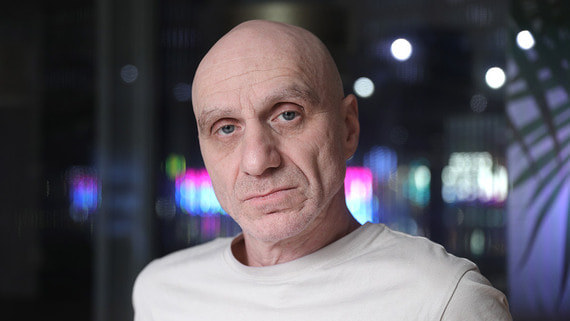
Viktor Shamirov, the acclaimed director behind the hit television series “The Big Second” (Bolshaya Sekunda), has opened up about his creative philosophy in a recent interview, drawing fascinating parallels between his work and the legacy of Russia’s greatest playwright, Anton Chekhov. The director, known for his nuanced approach to human relationships and social dynamics, shared his thoughts on group instinct, the importance of perspective, and the enduring relevance of classical dramatic traditions in contemporary television storytelling. His insights offer a rare glimpse into the mind of one of Russia’s most thoughtful filmmakers working in the medium today.
The Chekhov Connection: Classical Roots in Modern Storytelling
Shamirov’s claim to continue the Chekhovian tradition is neither casual nor unfounded. Anton Chekhov, who revolutionized theater in the late 19th and early 20th centuries, was renowned for his ability to capture the subtle complexities of human nature, the unspoken tensions between characters, and the profound significance of seemingly mundane moments. His plays like “The Cherry Orchard,” “Three Sisters,” and “Uncle Vanya” eschewed dramatic plot twists in favor of psychological depth and atmospheric storytelling. Shamirov applies these same principles to his television work, creating narratives that prioritize character development and emotional authenticity over sensationalism. This approach has proven remarkably effective in the modern streaming era, where audiences increasingly seek sophisticated, character-driven content that rewards careful attention.
The director’s methodology reflects a broader trend in contemporary Russian television, which has experienced a renaissance in recent years. Productions like “The Big Second” have garnered both critical acclaim and popular success by combining high production values with intelligent scripts that treat viewers as thoughtful participants rather than passive consumers. Shamirov’s emphasis on the Chekhovian tradition suggests a conscious effort to elevate television drama to the level of literary art, bridging the gap between highbrow theatrical traditions and mainstream entertainment.
Group Instinct and the Power of Perspective
In discussing his creative process, Shamirov touched upon the concept of group instinct, a theme that runs through much of his work. This sociological and psychological phenomenon, which describes how individuals modify their behavior when part of a collective, provides rich material for dramatic exploration. In “The Big Second,” characters constantly navigate the tension between personal desires and social expectations, between individual identity and group belonging. This dynamic creates the kind of internal conflict that Chekhov himself masterfully exploited, where the most significant battles occur not between people, but within them. Shamirov’s characters are rarely simple heroes or villains; instead, they are complex individuals shaped by their social environments, struggling to find meaning and connection in an often indifferent world.
Perhaps most intriguingly, Shamirov spoke about “the view from the other side of the fence” as a crucial element of his storytelling approach. This metaphor encapsulates his commitment to empathy and multiple perspectives, essential qualities for any dramatist working in the Chekhovian mode. By encouraging viewers to see situations from unexpected angles, Shamirov challenges comfortable assumptions and fosters deeper understanding. This technique proves particularly valuable in an era of increasing polarization, when the ability to comprehend different viewpoints has never been more important. The director’s work demonstrates that entertainment can be both engaging and enlightening, using the power of narrative to expand rather than narrow our understanding of human experience.
The Future of Russian Television Drama
Shamirov’s success with “The Big Second” represents a significant milestone in the evolution of Russian television. The series has demonstrated that domestic productions can compete with international content in terms of quality, sophistication, and audience engagement. Industry observers note that this success has encouraged other creators and networks to invest in ambitious projects that prioritize artistic integrity alongside commercial viability. The director’s influence extends beyond his own work, as younger filmmakers increasingly look to his example as proof that thoughtful, literary television can thrive in the contemporary media landscape. As streaming platforms continue to reshape viewing habits worldwide, directors like Shamirov are helping to establish Russian television as a serious player in the global entertainment industry.
Looking ahead, Shamirov’s philosophical approach to his craft suggests that his future projects will continue to explore the deep wells of human psychology and social interaction that have defined his career. By maintaining his connection to the Chekhovian tradition while embracing modern storytelling techniques, he occupies a unique position in contemporary Russian culture—one foot firmly planted in the rich soil of classical dramaturgy, the other stepping confidently into the future of visual storytelling. His work serves as a reminder that the most enduring stories are those that illuminate universal truths about the human condition, regardless of the medium in which they are told.
Expert Opinion: Viktor Shamirov’s explicit alignment with Chekhovian dramaturgy signals a maturation of Russian television that positions it for international breakthrough potential. His focus on psychological complexity over plot mechanics represents a sustainable creative strategy that will likely influence the next generation of Russian showrunners, potentially establishing a distinctive national voice in the increasingly globalized streaming landscape.