
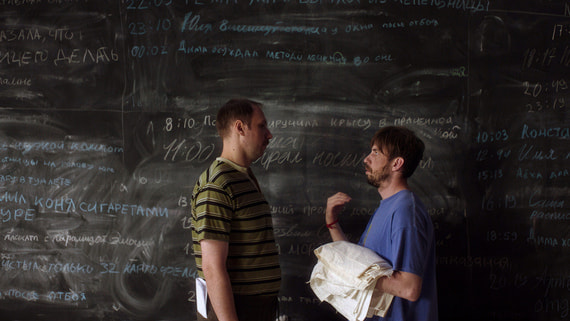
The Russian television industry has crowned a new creative achievement, as the dramedy series “Second Wind” emerged victorious at the prestigious Pilot Festival, capturing the attention of critics and audiences alike with its bold exploration of an experimental rehabilitation facility. The series, which blends dark humor with dystopian undertones, has drawn immediate comparisons to the legendary works of Georgian-Russian filmmaker Georgy Danelia, whose satirical masterpieces defined Soviet-era cinema and continue to influence contemporary storytelling.
The Pilot Festival, established as Russia’s premier platform for discovering innovative television content, has consistently championed projects that push creative boundaries. This year’s winning entry represents a significant departure from conventional rehabilitation narratives, presenting viewers with a thought-provoking examination of institutional control, human resilience, and the often absurd nature of bureaucratic systems designed ostensibly to help people recover from addiction and trauma.
A Fresh Take on the Rehabilitation Genre
“Second Wind” distinguishes itself through its unique tonal balance, masterfully weaving together elements of comedy and drama in a manner reminiscent of the genre-defying works that made Danelia famous. The series centers on an experimental rehabilitation facility where traditional treatment methods have been replaced with unconventional approaches that blur the line between therapy and social experiment. Patients find themselves navigating a surreal environment where the rules of ordinary life no longer apply, and where the distinction between healer and patient becomes increasingly ambiguous.
The show’s creators have crafted a narrative that operates on multiple levels, offering surface-level entertainment while simultaneously delivering pointed commentary on contemporary society’s approach to mental health, addiction, and the rehabilitation industry as a whole. This layered storytelling approach has resonated strongly with festival judges, who praised the series for its intellectual ambition and emotional depth. The writing demonstrates a keen understanding of how comedy can serve as a vehicle for exploring uncomfortable truths, a technique that Soviet-era filmmakers perfected under conditions of strict censorship.
The Danelia Legacy and Modern Television
Comparisons to Georgy Danelia carry significant weight in Russian cultural discourse. The filmmaker, who passed away in 2019, left behind an incomparable body of work including “Kin-dza-dza!” (1986), a science fiction comedy that depicted a dystopian alien world as a thinly veiled critique of Soviet society, and “Autumn Marathon” (1979), a bittersweet dramedy that captured the melancholy of everyday Soviet existence. Danelia’s genius lay in his ability to make audiences laugh while simultaneously confronting them with profound observations about human nature and societal dysfunction.
“Second Wind” appears to have absorbed these lessons, utilizing the rehabilitation setting as a microcosm for broader social commentary. The experimental facility becomes a stage where power dynamics, institutional absurdity, and the fundamental human desire for genuine connection play out against a backdrop of dark humor. This approach allows the series to address serious themes—addiction, mental health stigma, the commodification of wellness—without succumbing to the preachy earnestness that often undermines such narratives.
The Pilot Festival’s Growing Influence
The Pilot Festival has established itself as an essential incubator for Russian television innovation since its inception. Unlike traditional broadcasting models that prioritize safe, commercially proven concepts, the festival actively seeks out projects willing to take creative risks. Previous winners have gone on to achieve both critical acclaim and commercial success, demonstrating that audiences hunger for content that challenges conventional storytelling approaches. This year’s selection of “Second Wind” signals the festival’s continued commitment to championing bold, unconventional voices in an increasingly competitive streaming landscape.
Industry observers note that the success of such genre-blending projects reflects a broader shift in viewer expectations. Contemporary audiences, exposed to the golden age of international prestige television, now demand sophisticated narratives that refuse easy categorization. The dramedy format, which “Second Wind” exemplifies, has proven particularly effective at meeting these expectations, offering the emotional engagement of drama alongside the accessibility and palatability of comedy. As streaming platforms continue to expand their Russian-language offerings, productions like “Second Wind” represent the creative direction that may define the next decade of regional television.
Expert Opinion: The victory of “Second Wind” at the Pilot Festival signals a promising maturation in Russian television’s approach to socially conscious storytelling. By successfully channeling the satirical traditions of masters like Danelia into contemporary formats, the series demonstrates that domestic productions can compete with international prestige content while maintaining distinctly local creative sensibilities. This recognition may encourage further investment in ambitious, genre-defying projects that trust audiences to engage with complexity and nuance.